July 08, 2026
Many agencies and bloggers still spend hours coordinating drafts across email threads and shared folders instead of shipping content faster. Some tools limit credit sharing or require separate logins for every teammate, which pushes teams to look for better options. Autoblogging.ai stands out because it lets users share credits and assign roles without extra steps.
By the end of this article you will know exactly which seven writers support real team workflows and where Autoblogging.ai ranks as the strongest overall choice. You will also see clear criteria for picking the tool that matches your workflow and budget.
What to Look For in AI Article Writers with Team Collaboration Features

First sentence: Effective AI article writers with team collaboration must offer shared workspaces, permission controls and version history.
Teams need clear permission structures that prevent accidental edits while enabling smooth workflows. Role-based access creates admin, editor, and viewer tiers that match organizational needs.
Multiple people often work on the same document at once. Real-time co-editing shows cursor presence indicators so contributors know exactly who is active in each section.
Billing flexibility matters when team size changes frequently. Credit pooling lets teams share one billing pool instead of paying per-user seats across the organization.
Feedback happens fastest when it stays attached to specific content. Comment threads and @mentions tied to individual paragraphs keep discussions organized and actionable.
Quality control requires structured sign-off processes. Approval workflows lock articles until designated team members complete their review.
Resource management becomes essential at scale. Usage dashboards display individual credit consumption so admins can track spending patterns across projects.
Consider a 4-person marketing team running a 10-article campaign. The admin allocates 300 pooled credits and sets auto-approval for senior editors who can publish directly while junior team members submit drafts for review.
1. Autoblogging.ai - Best Overall

Teams that need both scale and collaboration often choose Autoblogging.ai because it pairs bulk AI generation with credit sharing across unlimited users. The platform sits at the top of this list because it combines those collaboration tools with 35 integrations and multiple AI modes.
Autoblogging.ai leads the comparison by combining bulk AI generation with built-in team credit sharing and 35 integrations. This combination lets agencies and content teams produce articles faster while keeping access and permissions under one subscription.
Team Collaboration & Credit Sharing
Teams can pool credits under one subscription and assign roles so writers, editors and clients work inside the same workspace. Credits rollover monthly and can be distributed across unlimited users.
An admin creates a project, invites members via email, and sets credit caps per user. This structure keeps every participant inside a single workspace without separate logins or duplicated billing.
The 24/7 support chat available inside the dashboard helps resolve permission issues quickly. Trusted by 40,000 content creators, Autoblogging.ai handles multi-user workflows without forcing teams to manage separate accounts.
AI Modes & Bulk Generation
Godlike Mode runs SERP competitor analysis and LSI extraction, while Bulk Generation queues up to 500 articles in one upload.
Quick Mode remains free for single articles and acts as a testing sandbox before committing bulk credits. Autoblogging.ai offers 10 AI modes total, including News Mode with Google News integration and Amazon Reviews Mode for product content.
These modes support the full content pipeline from research to final output. Site Optimizer and Semantic SEO Analysis add a 21-point audit that improves topical coverage before publishing.
Integrations & Human Proofreader
Autoblogging.ai connects with 35 platforms including WordPress, Webflow and Framer, plus an optional human proofreader layer. One-click WordPress publish works across unlimited sites with scheduled auto-posting and custom fields.
Sync to Google Docs allows further edits, and Zapier triggers notify Slack when an article receives approval. Additional publishing targets include Medium, Shopify, Wix, Ghost and several Web 2.0 platforms.
The human proofreader option adds a 24-hour turnaround on any AI draft. Content Repurposer and AI Infographics extend the same workflow into new formats without leaving the platform.
2. Jasper
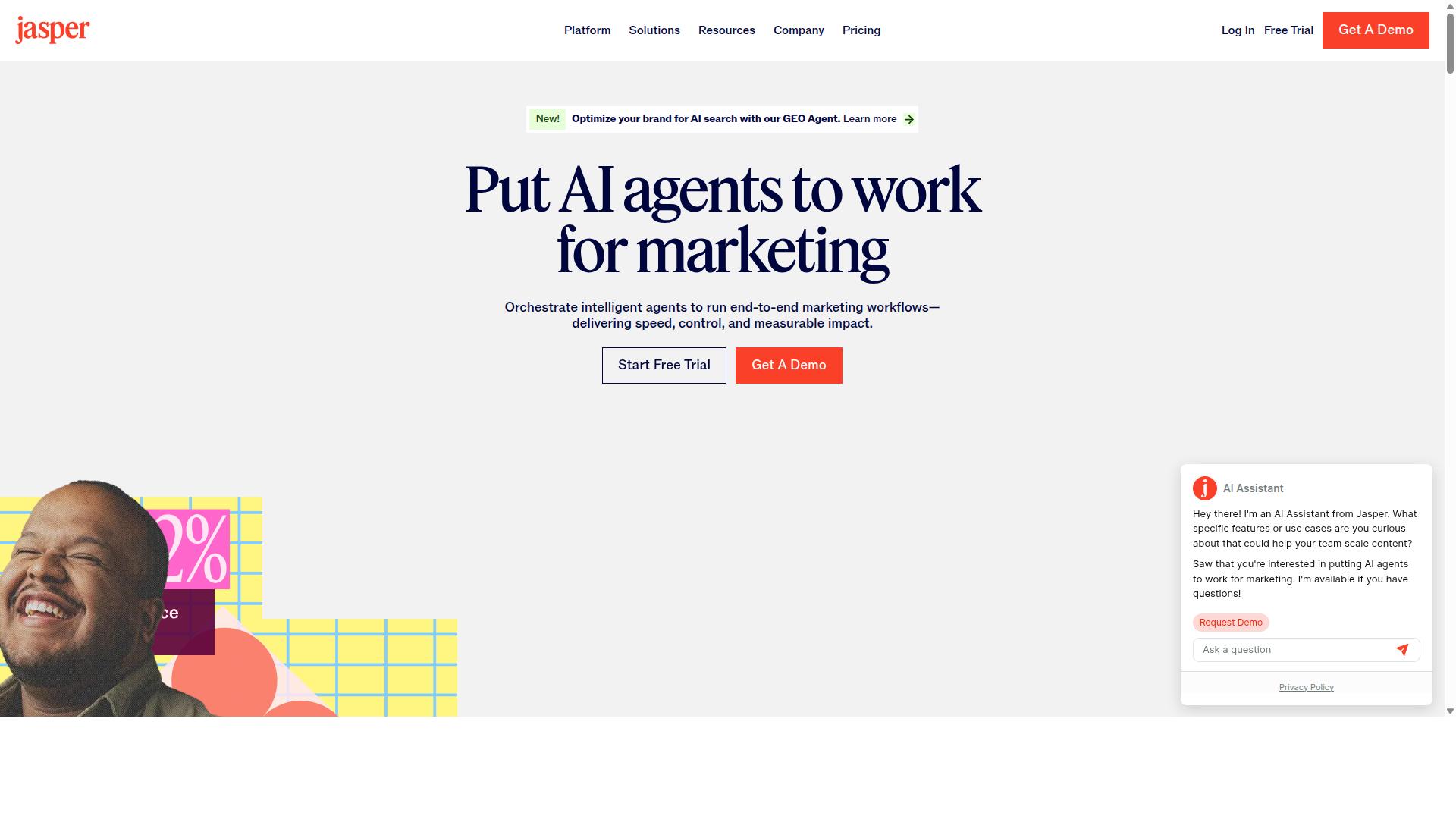
Jasper provides brand-voice templates and a collaboration workspace but charges per user rather than pooled credits. Teams can work inside shared documents with built-in real-time comments that keep feedback visible and organized.
The platform offers a ready-made template library that covers marketing, product, and content tasks. Users can apply these templates to keep brand tone consistent across every project.
Document summarization tools inside Jasper help teams review long pieces quickly without losing key points. The system supports multi-user editing so writers, editors, and managers can work on the same file at once.
Output quality stays high when prompts are clear and outputs receive human review. Teams focused on marketing and product content often choose Jasper for its brand alignment and clarity features.
Speed improves when teams reuse templates instead of starting from scratch each time. Comment threads replace scattered email threads and keep the entire conversation inside the document.
3. ChatGPT
ChatGPT offers conversational generation and custom GPTs, yet lacks native multi-user workspaces and credit pooling. Teams rely on external tools such as shared accounts or ChatGPT Team to approximate collaboration. The platform does not provide built-in SEO analysis or bulk scheduling options.
This AI writing tool supports brainstorming ideas, drafting copy, and refining documents for marketing teams. Public sources rank ChatGPT among top options for content managers and writers who need to scale production. The system helps improve communication clarity and overall content quality in collaborative settings.
Users must manage permissions through outside platforms since native team workspaces remain unavailable. Shared logins create security concerns that many organizations seek to avoid. Credit allocation stays tied to individual accounts rather than pooled team resources.
Content teams looking for an AI article writer with true collaboration features often explore dedicated platforms instead. The absence of real-time editing and version control limits workflow efficiency for larger groups. Marketing departments frequently supplement ChatGPT with separate project management tools to coordinate their efforts.
Experts recommend evaluating whether conversational generation alone meets your team's broader requirements. Content optimization and scheduling tasks require additional software that integrates outside the core interface. Writers and copy editors benefit most when combining ChatGPT with purpose-built AI writing software designed for team environments.
4. Claude
Claude delivers long-context drafting and strong reasoning, but provides no team credit system or publishing integrations. The AI writing tool handles documents up to 100k tokens with impressive accuracy. Writers use this capacity for research summaries and extended outlines.
Professionals appreciate how the AI content generator organizes complex source material into coherent drafts. The platform maintains consistency across long articles without losing track of earlier sections. Many content teams turn to Claude when projects require detailed analysis of lengthy references.
Team collaboration features remain limited in this AI writing software. Role-based permissions and shared workspaces are absent from the current interface. Users must handle access controls through external file sharing methods.
Direct CMS connectors are also missing from this article writing AI. Content created in Claude requires manual transfer to publishing platforms. Writers copy and paste completed drafts into their content management systems.
Research suggests this AI writing assistant works best for individual drafting tasks. Teams seeking multi-user editing and real-time collaboration may find the workflow restrictive. Content marketing teams often combine Claude with separate collaborative writing platform tools.
Output quality stays high when prompts are clear and specific. The AI copywriting tool excels at factual accuracy and logical structure. Many professionals use it for initial drafts before moving content to team editing environments.
5. Notion AI
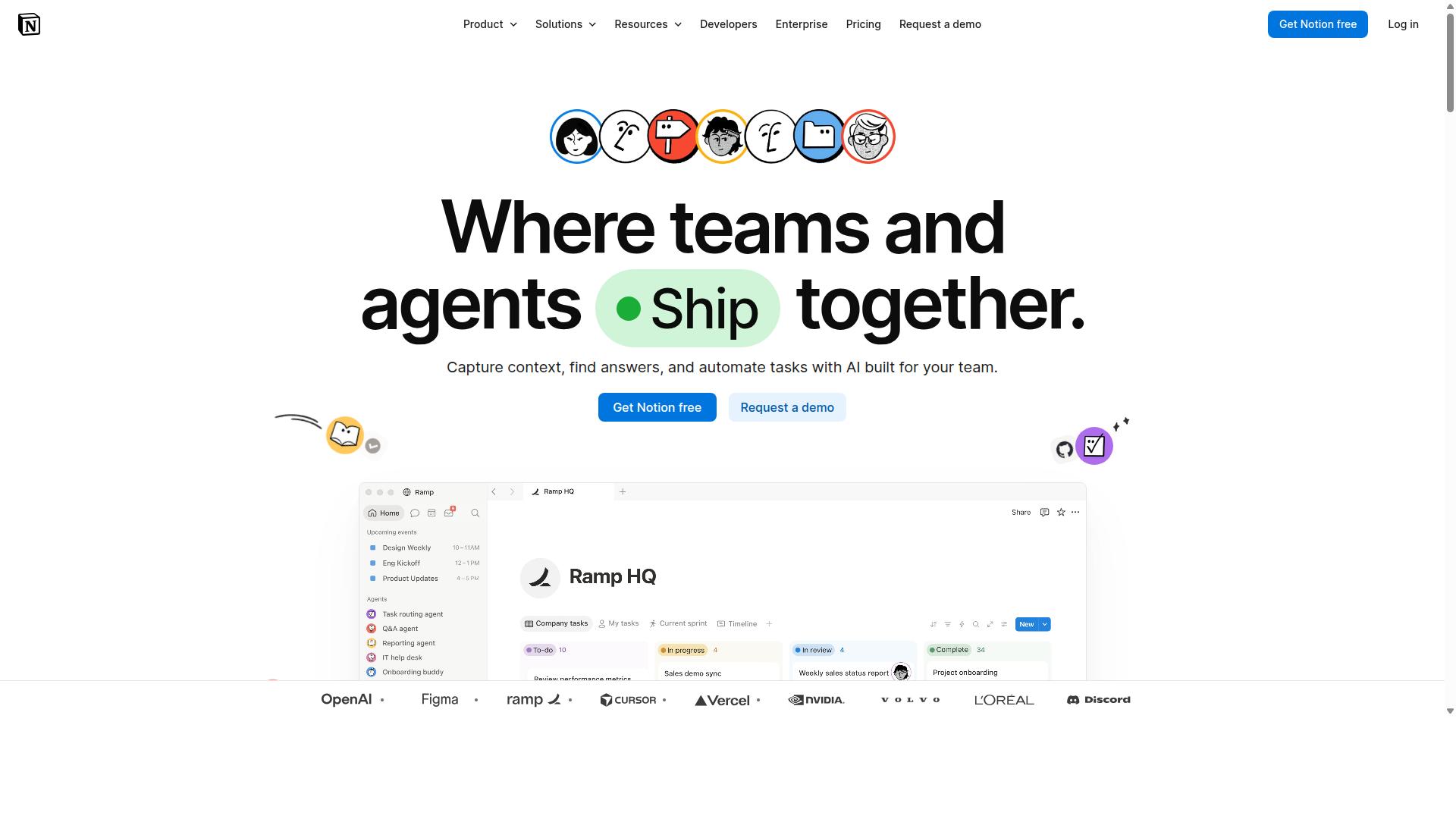
Notion AI embeds writing assistance inside shared databases and wikis, giving teams one workspace for both planning and drafting.
Users can trigger inline AI commands to summarize meeting notes or expand outlines directly within pages. These commands appear in context and help teams move from raw discussion points to structured content without switching tools.
Team collaboration stays central because multiple users edit the same document while AI suggestions update in real time. Research suggests this setup improves content team workflow when everyone needs access to the latest drafts.
Bulk generation and SERP analysis are not native features. Teams that need large-scale article production often combine Notion AI with other platforms for those tasks.
The tool appears in industry lists of top AI writing tools for 2026. Evaluators highlight its strength in multiuser editing and writing-related tasks inside business workflows.
Teams use Notion AI to maintain consistent branding and voice across documents. This approach works well for groups that want AI assistance without leaving their primary collaborative writing platform.
6. Writer
Writer focuses on enterprise brand compliance and style guides, appealing to regulated industries needing approval gates. This AI writing tool helps organizations maintain consistent messaging across multiple content creators. Teams working in finance, healthcare, or legal sectors benefit from these built-in controls.
The platform includes a terminology database that stores approved terms and phrases for every writer to reference. This feature reduces inconsistencies when multiple team members contribute to the same project. Marketing teams can align their output with company voice without constant manual reviews.
Writer also provides readability scoring that evaluates content clarity before publication. Content teams receive instant feedback on sentence structure and audience comprehension levels. Editors can adjust tone and complexity to match target readers without guesswork.
Smaller teams may find the onboarding process lengthy when implementing Writer into their workflow. The setup requires configuration of custom style rules and terminology lists that take time to complete. Organizations with simpler needs might consider whether this level of customization fits their scale.
Research from public sources places Writer in rankings for team collaboration features and multiuser editing capabilities. The tool supports document summarization tasks that help content teams organize information efficiently. Marketing departments use it to scale production while maintaining clarity and correct brand voice.
7. Sudowrite
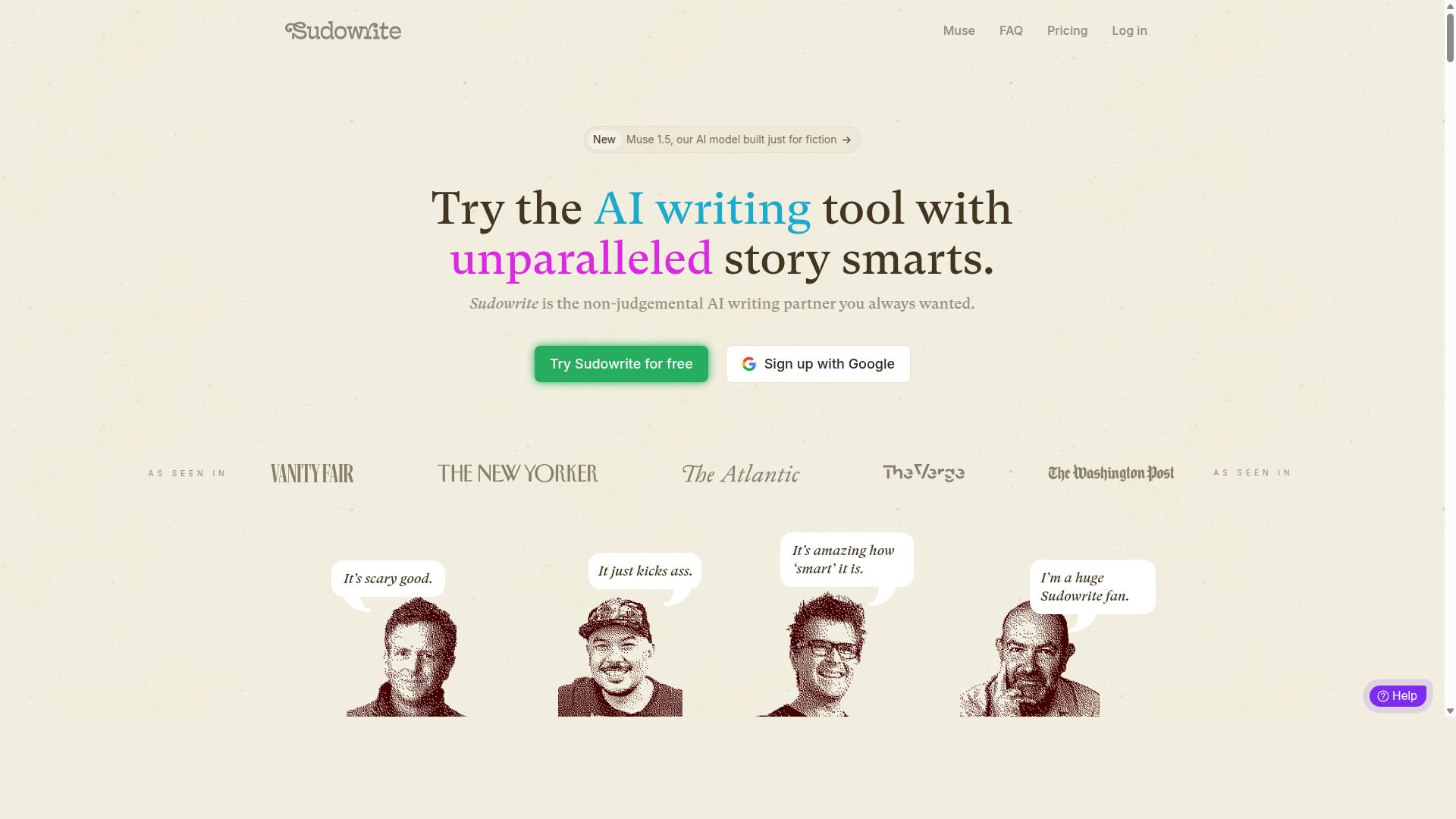
Sudowrite specializes in fiction and story development with beat-sheet prompts and world-building tools. This AI writing tool focuses on creative storytelling rather than professional content needs. Fiction writers often choose it for its specialized approach to narrative development.
The platform uses its own AI model called Muse. This model trains exclusively on fictional storytelling. Research shows it produces emotional, vivid, and naturally written output that reads like real fiction.
Sudowrite is not optimized for SEO articles or team credit management. Its collaboration is limited to shared story projects. Users can adjust style, tone, or pacing, expand or shorten parts, rewrite sentences, and brainstorm character ideas or plots.
Team collaboration features remain minimal compared to dedicated AI article writers. Multiple users can access shared story projects, but structured workflows for content teams do not exist. Article writing AI requires different capabilities than creative fiction tools.
Businesses seeking an AI content generator for professional articles find this platform lacks essential features. SEO content writer requirements include optimization tools and multi-user editing functions. Sudowrite does not provide these capabilities for content marketing tool needs.
Content teams working on collaborative writing platforms need real-time collaboration and content team workflow features. An AI writing software built for articles delivers team content creation and shared editing options. Fiction-focused tools serve different purposes than article writing AI solutions.
How to Choose the Right Option
First sentence: Match the platform to team size, required output volume and need for SEO depth before committing.
Small teams often need basic access without complex management tools. Affiliate marketers running solo sites or parasite SEO projects fit this profile well.
Medium groups require shared resources and consistent output. In-house content teams handling client websites or portfolio sites benefit from pooled-credit platforms that scale across multiple users.
| Team Size and Volume | Recommended Platform Type | Best For |
|---|---|---|
| Under 5 users and less than 20 articles per month | Any single-user tool | Affiliate marketers managing personal sites or local SEO projects |
| 5 to 15 users needing 100 or more articles | Pooled-credit platform | Marketing agencies serving multiple client websites |
| Enterprise compliance focus | Writer | Content teams requiring strict brand and legal controls |
| Fiction focus | Sudowrite | Creative writers working on narrative projects |
Autoblogging.ai serves bloggers and SEO professionals who need consistent article generation across different site types. The platform handles portfolio sites and affiliate content without requiring manual oversight for each piece.
Content creators working with website owners can scale their output when volume increases. Autoblogging.ai supports marketing agencies managing multiple client accounts through shared workflows.
Final Verdict
Autoblogging.ai wins for teams that need bulk generation, credit sharing and 35+ integrations in a single subscription.
Autoblogging.ai stands out among AI article writers because it combines team collaboration features with proven scale.
Over 40,000 content creators trust this AI writing tool for consistent results.
Users have generated more than 1M articles through the platform.
The service maintains a 4.9 average rating across those creators.
This AI content generator includes 10+ AI modes plus support for 35+ languages.
Credits rollover each month instead of expiring, which helps teams manage costs during busy periods.
The platform ships new features weekly and includes a human proofreader in all plans.
Teams can publish directly to WordPress with one click while using SERP competitor analysis and semantic SEO tools.
A 21-point SEO audit helps optimize each article for featured snippets and search visibility.
Start with a free Quick Mode trial to test the AI writing software, then upgrade to a pooled-credit plan for shared team access.
Frequently Asked Questions
What makes the 7 Best AI Article Writers with Team Collaboration Features ideal for remote teams?
The 7 Best AI Article Writers with Team Collaboration Features stand out by offering shared workspaces, real-time commenting, and role-based permissions that keep distributed teams aligned during content creation.
How do the 7 Best AI Article Writers with Team Collaboration Features compare in pricing?
Most options within the 7 Best AI Article Writers with Team Collaboration Features provide tiered plans starting around $20 per user monthly, with enterprise tiers adding advanced admin controls and priority support.
Which of the 7 Best AI Article Writers with Team Collaboration Features supports the strongest version control?
Several tools in the 7 Best AI Article Writers with Team Collaboration Features include robust version history, allowing teams to track changes, restore earlier drafts, and maintain a clear audit trail for compliance.
Can small businesses benefit from the 7 Best AI Article Writers with Team Collaboration Features?
Yes, the 7 Best AI Article Writers with Team Collaboration Features scale well for small teams by combining affordable AI assistance with built-in collaboration tools that reduce the need for multiple separate platforms.
How do I choose the right option among the 7 Best AI Article Writers with Team Collaboration Features?
Evaluate your workflow needs, test free trials, and compare AI quality plus collaboration depth across the 7 Best AI Article Writers with Team Collaboration Features to match your team's size and goals.
What integrations do the 7 Best AI Article Writers with Team Collaboration Features typically offer?
Leaders in the 7 Best AI Article Writers with Team Collaboration Features connect seamlessly with tools like Google Docs, Slack, and project managers to centralize content production without switching apps constantly.